2027 details will be announced in December
Elegant Freedom: Nature, Tradition, and the Human Spirit
Presented by J & J Art, Inc.
Booth 100
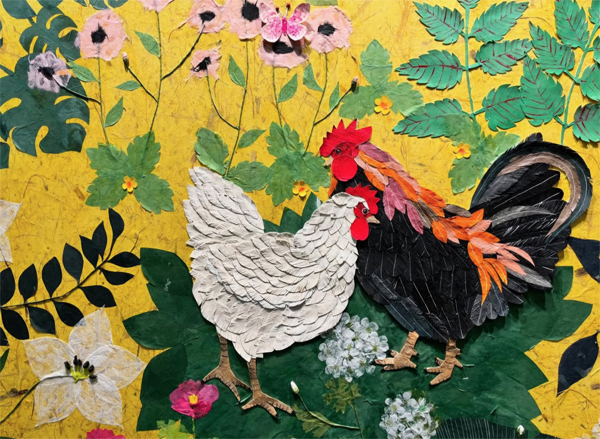
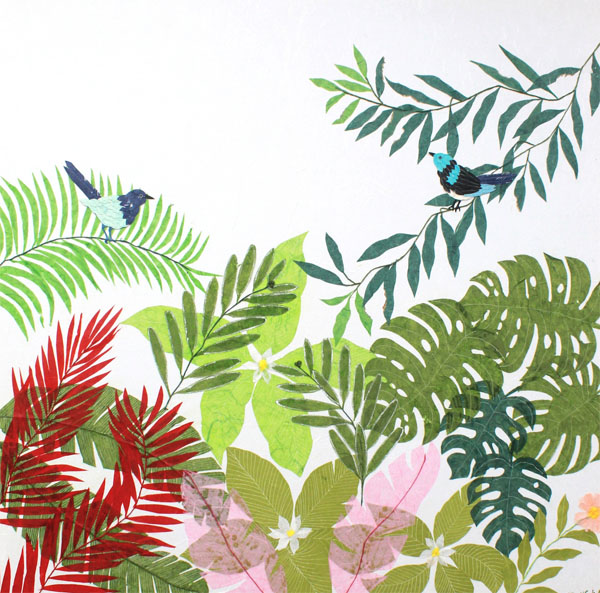
J & J Art, Inc. will present a curated collection of Jinny Suh’s latest works under the theme “Elegant Freedom: Nature, Tradition, and the Human Spirit.” The exhibition aims to create a peaceful, immersive environment that connects viewers with the emotional beauty of Korean culture, told through contemporary visual language.
Jinny Suh’s work is rooted in nature—particularly chickens, birds, and butterflies— and uses these symbols to explore themes of freedom, elegance, and human connection. Through the use of Korean Hanji (traditional paper) and vibrant traditional Korean colors, her artwork reinterprets time-honored values for modern viewers, bringing warmth and emotional resonance to the often cold, urban spaces of today’s world.
As Jinny expresses in her own words: “At the heart of my work is Korean Hanji (traditional handmade paper) – a material with over 8,000 years of history, known for its resilience, elegance, and eco-friendliness. Remarkably, Hanji has been internationally recognized for its quality and preservation capabilities: in 2016, Italy’s prestigious National Institute of Archives and Heritage officially certified Hanji from Uiryeong, Korea, as a restoration-grade material for European cultural heritage. Since then, Hanji has been used to restore some of Italy’s most treasured artifacts, including St. Francis’ handwritten prayers and the Losano Gospel.
This is the spirit I want to bring to the LA Art Show – a celebration of Korean cultural excellence through sustainable, meaningful materials and visual storytelling. In a world increasingly impacted by war, climate crisis, displacement, and ecological destruction, I create works that reflect a longing for peace, beauty, and healing.”
Her work presents a thoughtful and poetic lens on life, inviting viewers into an experience that is both visually rich and spiritually comforting. This artistic approach has resonated deeply with collectors in both the East and West, leading to a growing international following and strong acquisition history.
Jinny Suh’s work is rooted in nature—particularly chickens, birds, and butterflies— and uses these symbols to explore themes of freedom, elegance, and human connection. Through the use of Korean Hanji (traditional paper) and vibrant traditional Korean colors, her artwork reinterprets time-honored values for modern viewers, bringing warmth and emotional resonance to the often cold, urban spaces of today’s world.
As Jinny expresses in her own words: “At the heart of my work is Korean Hanji (traditional handmade paper) – a material with over 8,000 years of history, known for its resilience, elegance, and eco-friendliness. Remarkably, Hanji has been internationally recognized for its quality and preservation capabilities: in 2016, Italy’s prestigious National Institute of Archives and Heritage officially certified Hanji from Uiryeong, Korea, as a restoration-grade material for European cultural heritage. Since then, Hanji has been used to restore some of Italy’s most treasured artifacts, including St. Francis’ handwritten prayers and the Losano Gospel.
This is the spirit I want to bring to the LA Art Show – a celebration of Korean cultural excellence through sustainable, meaningful materials and visual storytelling. In a world increasingly impacted by war, climate crisis, displacement, and ecological destruction, I create works that reflect a longing for peace, beauty, and healing.”
Her work presents a thoughtful and poetic lens on life, inviting viewers into an experience that is both visually rich and spiritually comforting. This artistic approach has resonated deeply with collectors in both the East and West, leading to a growing international following and strong acquisition history.
Including You And Me
Presented by Gallery Wald
Booth 805
Presented by Gallery Wald
Booth 805
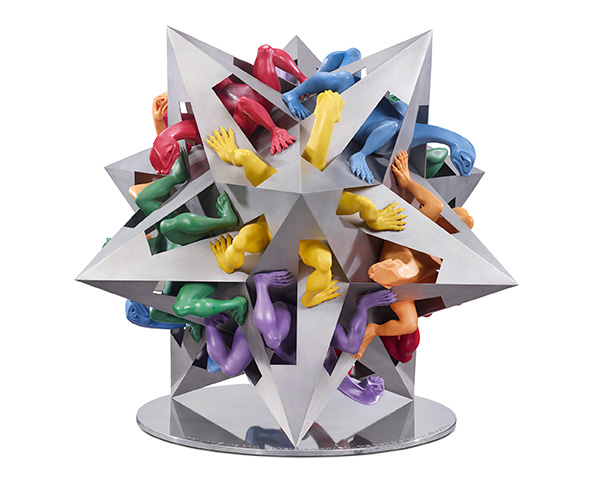
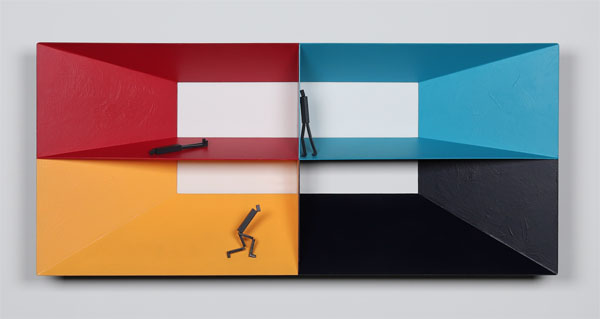
With a decade-long career that bridges traditional sculptural techniques and contemporary conceptualism, Moon Min has established himself through a distinctive series titled “나를 비롯한 그대들 (Including You and Me). His practice reflects a philosophical exploration of modern humanity in relation to technology and identity, utilizing materials such as metal, resin, and mixed media.
The “Including You and Me” series simplifies the human figure into geometric forms, portraying modern individuals confined within square frameworks. These boxed forms symbolize the structured society we live in – an architecture we’ve collectively built. Through this perspective, the artist observes and narrates the endurance and subtle resistance of those existing within these confines.
Moon Min intentionally limits expressive gestures within these frames, allowing emotion to surface not through overt facial or hand expressions, but via the faint traces found in posture – through the tension of the back or the spacing of the feet. These figures, though structurally constrained, quietly reveal their inner lives. His work is less about physical form and more about how repressed emotions are subliminally expressed – how the inner self attempts to surface from within the rigid square boundary.
Working primarily with metals like aluminum and copper, Moon renders these emotions as organic movements captured in cold, industrial material. Despite the hardness of his medium, the sculptures pulse with warmth and quiet vitality, suggesting the persistent emotional undercurrents within a heavily ordered world.
The square-shaped spaces in Moon Min’s work function as more than just structural motifs; they symbolize the framework that defines and regulates human existence and social order. Within these constructed boundaries, individuals are assigned standardized identities and drift between anonymity and individuality..
The “Including You and Me” series simplifies the human figure into geometric forms, portraying modern individuals confined within square frameworks. These boxed forms symbolize the structured society we live in – an architecture we’ve collectively built. Through this perspective, the artist observes and narrates the endurance and subtle resistance of those existing within these confines.
Moon Min intentionally limits expressive gestures within these frames, allowing emotion to surface not through overt facial or hand expressions, but via the faint traces found in posture – through the tension of the back or the spacing of the feet. These figures, though structurally constrained, quietly reveal their inner lives. His work is less about physical form and more about how repressed emotions are subliminally expressed – how the inner self attempts to surface from within the rigid square boundary.
Working primarily with metals like aluminum and copper, Moon renders these emotions as organic movements captured in cold, industrial material. Despite the hardness of his medium, the sculptures pulse with warmth and quiet vitality, suggesting the persistent emotional undercurrents within a heavily ordered world.
The square-shaped spaces in Moon Min’s work function as more than just structural motifs; they symbolize the framework that defines and regulates human existence and social order. Within these constructed boundaries, individuals are assigned standardized identities and drift between anonymity and individuality..

Dr. Esther Mahlangu
Presented by Art of Contemporary Africa
Booth 900
Presented by Art of Contemporary Africa
Booth 900
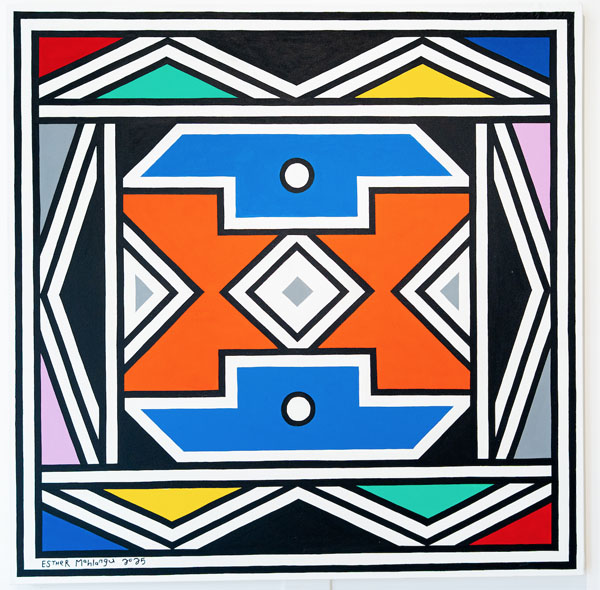
Esther Mahlangu is the globally acclaimed visual artist and much-loved cultural ambassador of the Ndebele nation. She was born in 1935 and has made a valuable contribution to contemporary art over eight decades. In 1991, Dr Mahlangu became the first woman and first African to be invited to participate in the BMW Art Car Collection. Bettina Korek, the CEO, and Hans Ulrich Obrist, the artistic director of the Serpentine recently said ‘Esther Mahlangu is one of the most important artists of her time’ when they unveiled her mural at the Serpentine in 2024.
The Melrose Gallery/Art of Contemporary Africa, Dr Mahlangu’s exclusive global representative, will present a special feature at the show. This activation includes several of her bright, abstract paintings and vessels for which she has won such global acclaim, a short video interview, and a timeline featuring some of her impressive career highlights.
The Melrose Gallery/Art of Contemporary Africa, Dr Mahlangu’s exclusive global representative, will present a special feature at the show. This activation includes several of her bright, abstract paintings and vessels for which she has won such global acclaim, a short video interview, and a timeline featuring some of her impressive career highlights.
Yigal Ozeri
Presented by Corridor Contemporary
Booth 506
Presented by Corridor Contemporary
Booth 506
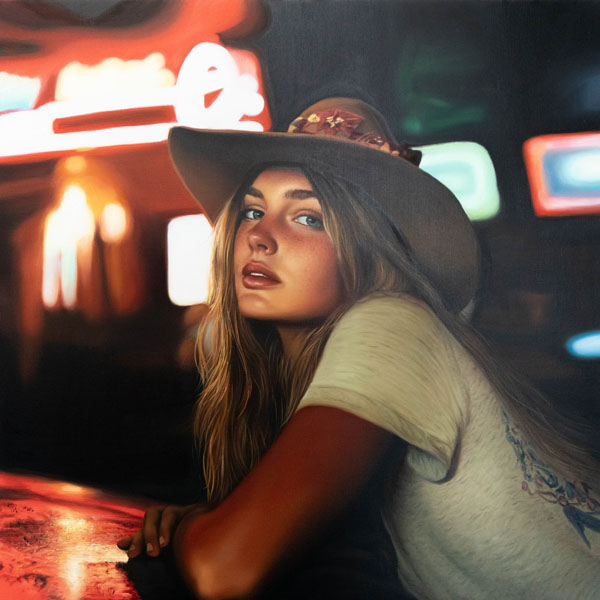
Yigal Ozeri’s solo presentation offers an intimate encounter with one of today’s most celebrated painters.
Known for his hyper-realistic technique and cinematic sensibility, Ozeri captures the fleeting, often overlooked
moments of everyday life with uncommon tenderness. His deep commitment to realism is not merely technical,
it is emotional, rooted in a lifelong fascination with the human presence, natural light, and the quiet narratives
that unfold within ordinary spaces.
Ozeri presents a selection of portraits of women situated in diverse environments: the bustling streets, the glow of diners, and the serenity of natural landscapes. These works reveal his ability to balance specificity with universality – the individuality of each sitter is rendered with extraordinary detail, yet the scenes feel both familiar and dreamlike. Alongsidethese portraits, Ozeri showcases interior scenes from classic diners, the textured charm of London streets, and sweeping vistas of nature, each painted with his signature devotion to atmosphere and mood.
Together, these works form a cohesive window into Ozeri’s world – one that blends realism with poetic observation. Whether depicting the chrome surfaces of a diner booth, the muted tones of a rainy London afternoon, or the dappled light filtering through a forest, Ozeri transforms everyday environments into luminous visual stories. His presentation offers not only a survey of his remarkable range but a reminder of the beauty embedded in the immediate, the intimate, and the real.
Ozeri presents a selection of portraits of women situated in diverse environments: the bustling streets, the glow of diners, and the serenity of natural landscapes. These works reveal his ability to balance specificity with universality – the individuality of each sitter is rendered with extraordinary detail, yet the scenes feel both familiar and dreamlike. Alongsidethese portraits, Ozeri showcases interior scenes from classic diners, the textured charm of London streets, and sweeping vistas of nature, each painted with his signature devotion to atmosphere and mood.
Together, these works form a cohesive window into Ozeri’s world – one that blends realism with poetic observation. Whether depicting the chrome surfaces of a diner booth, the muted tones of a rainy London afternoon, or the dappled light filtering through a forest, Ozeri transforms everyday environments into luminous visual stories. His presentation offers not only a survey of his remarkable range but a reminder of the beauty embedded in the immediate, the intimate, and the real.
Paul Simonon
Presented by John Martin Gallery
Booth 508
Presented by John Martin Gallery
Booth 508
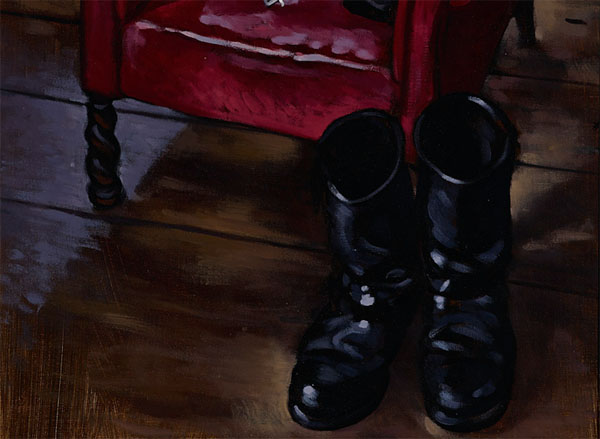
Paul Simonon: Painting and Biking in London and LA brings together five paintings that trace the artist’s lifelong connection to biker culture, from the streets of Paddington in the 1960s to his time in California in the 1980s. Painted a decade ago and drawn from Simonon’s personal collection, the works depict jackets, gloves, bikes, and helmets as quiet still lifes and reveal the profound influence biker culture has had on shaping Simonon’s artistic output, in both painting and music.
Riding through Los Angeles on old Harleys in the early 1980s, Paul Simonon became part of a loose, moving fraternity of musicians and bikes. After the break-up of The Clash, Simonon and fellow musician Nigel Dixon travelled to the United States, bought vintage Harleys in El Paso, and rode west to California. For months they cruised around LA with friends including Steve Jones of the Sex Pistols – “like a long, leather motorcycle snake,” as Simonon recalls.
The five works shown at the LA Art Show are from Simonon’s own collection and were featured in Wot No Bike, his 2014 exhibition at the Institute of Contemporary Art, London. Drawing on motifs redolent of classical memento mori, Simonon evokes personality through still lifes of jackets, gloves, bikes, cigarettes, and helmets, at rest after the ride. These works reflect a lifelong engagement with biking culture, its objects, rituals, and endurance. As Simonon says, “A leather jacket never ages.”
Riding through Los Angeles on old Harleys in the early 1980s, Paul Simonon became part of a loose, moving fraternity of musicians and bikes. After the break-up of The Clash, Simonon and fellow musician Nigel Dixon travelled to the United States, bought vintage Harleys in El Paso, and rode west to California. For months they cruised around LA with friends including Steve Jones of the Sex Pistols – “like a long, leather motorcycle snake,” as Simonon recalls.
The five works shown at the LA Art Show are from Simonon’s own collection and were featured in Wot No Bike, his 2014 exhibition at the Institute of Contemporary Art, London. Drawing on motifs redolent of classical memento mori, Simonon evokes personality through still lifes of jackets, gloves, bikes, cigarettes, and helmets, at rest after the ride. These works reflect a lifelong engagement with biking culture, its objects, rituals, and endurance. As Simonon says, “A leather jacket never ages.”
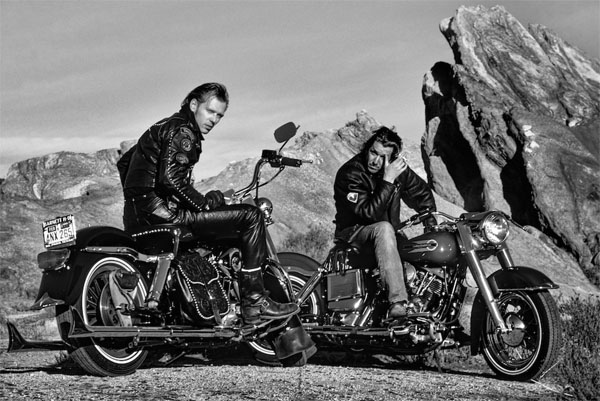
Paul Simonon and Steve Jones in California 1987.
Photograph by Robert Matheu, copyright Estate of Robert Matheu.
2025
Steel Che (Youngkwan Choi)
Presented by Art In Dongsan
Booth 302
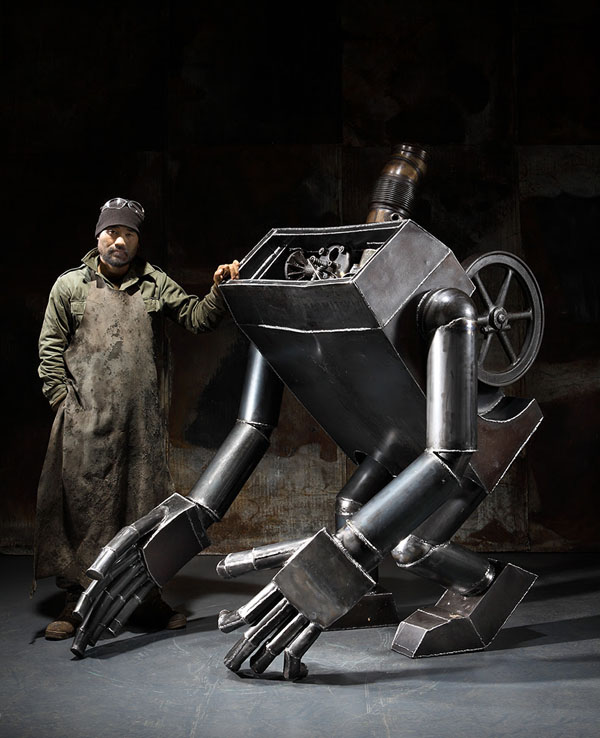
Art in Dongsan, established in 2018 with galleries in Seoul and Goyang, presents the metalwork of Steel Che (Youngkwan Choi). This exhibition highlights Che’s sculptural works, which repurpose industrial materials into artistic forms.
Youngkwan Choi, known professionally as Steel Che, has been creating metal sculptures for over three decades. His work, deeply influenced by his background in art education and his family’s connection to the steel industry, bridges the gap between traditional craftsmanship and contemporary artistic expression.
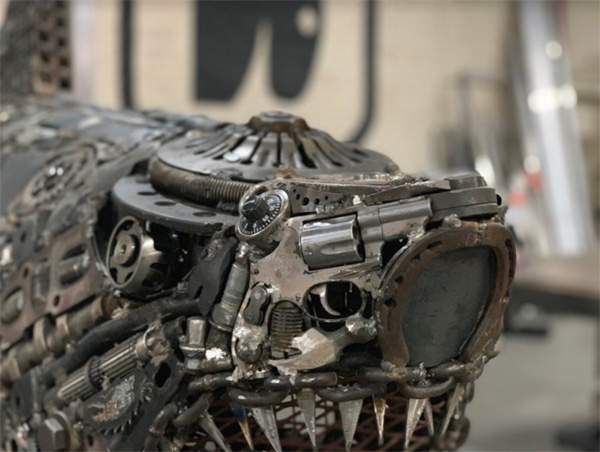
The exhibition’s centerpiece, “Steam Robot,” demonstrates Che’s mastery of steel manipulation. This large-scale sculpture, along with other works crafted from discarded metal, showcases Che’s artistic philosophy of transforming industrial materials into thought-provoking art. His diverse career, including collaborations with Harley Davidson Korea, informs his unique approach to sculpture.
Art in Dongsan’s presentation of Steel Che offers visitors a unique opportunity to experience the intersection of industrial heritage and contemporary sculpture, showcasing the evolving landscape of Korean art.
Youngkwan Choi, known professionally as Steel Che, has been creating metal sculptures for over three decades. His work, deeply influenced by his background in art education and his family’s connection to the steel industry, bridges the gap between traditional craftsmanship and contemporary artistic expression.
The exhibition’s centerpiece, “Steam Robot,” demonstrates Che’s mastery of steel manipulation. This large-scale sculpture, along with other works crafted from discarded metal, showcases Che’s artistic philosophy of transforming industrial materials into thought-provoking art. His diverse career, including collaborations with Harley Davidson Korea, informs his unique approach to sculpture.
Art in Dongsan’s presentation of Steel Che offers visitors a unique opportunity to experience the intersection of industrial heritage and contemporary sculpture, showcasing the evolving landscape of Korean art.
The Nature of Art
Presented by Coral Gallery
Booth 711
Presented by Coral Gallery
Booth 711
“A work of art encountered as a work of art is an experience, not a statement or an answer to a question. Art is not only about something; it is something. A work of art is a thing in the world, not just a text or commentary on the world.” — Susan Sontag, Against Interpretation —
The nature of art is a subject that has been debated for centuries and remains an enigma. The original split between nature and culture is the basic postulate that makes us human, but it is also what drives us to seek a connection with nature through art.
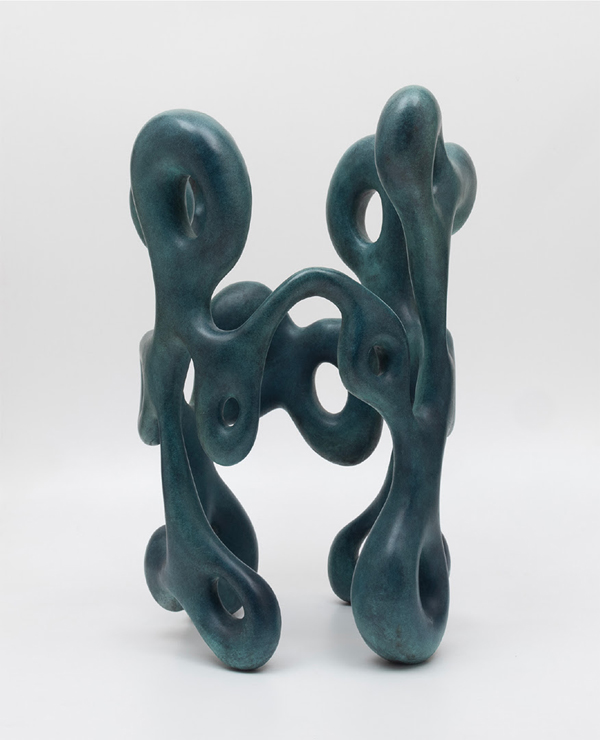
Artistic practices, like religious ones, are variations on an attempt to suture the gap between nature and culture, and Roberto Vivo’s work is an example of how art can be used to explore this relationship and find new ways of connecting with nature.
In his works, Roberto Vivo establishes a deliberate break with history, as he dispenses with references that date his view and restores forms to their primary and pristine character. In this way, he manages to reformulate the question about classical art or, better said, about what we call classical in art. That is to say, that enigmatic characteristic that transcends anchorage in an era and that continues to question where the conditions of existence that sustained the concretion and meaning of a work of art have disappeared. The action of time thus becomes superfluous in its cruel exercise of peremptory expiration over each period of life. And it forces us to think in terms of a method of interpretation that accounts for that zone of aesthetic perception that escapes the rhetorical webs of each present.
Vivo’s production evokes the boldness, and the formal and compositional freshness, of Henri Matisse’s famous cut-outs, for which the French artist cut out shapes from colored paper and arranged them on other sheets that he laid out in his studio. Characteristic of Matisse’s last creative stage, these collages composed of irregular and colorful cut-outs, similar to vegetal or floral motifs, resonate in Vivo’s works. But, in Vivo’s case, he carries them to three-dimensionality, dynamizing the forms and rendering them corporeal.
Inquiring into the essential elements that nature and art share is at the core of Vivo’s research. Form, color, volume and texture come into play in the spatiotemporal dimensions in which his works unfold. The artist appears to hide the coordinates that give rise to his designs, at times organic, at times fantastic. We observe them in a here and now, as a snapshot event that might continue to develop and grow in our absence.
In a gesture of apparent innocence, of attachment to the playful possibilities of creation, Roberto Vivo deliberately strips his works of the urgency of context, of reference and of historicity, thus offering the viewer the opportunity to approach the game of sensitive contemplation and experience without prejudice.
The nature of art is a subject that has been debated for centuries and remains an enigma. The original split between nature and culture is the basic postulate that makes us human, but it is also what drives us to seek a connection with nature through art.
Artistic practices, like religious ones, are variations on an attempt to suture the gap between nature and culture, and Roberto Vivo’s work is an example of how art can be used to explore this relationship and find new ways of connecting with nature.
In his works, Roberto Vivo establishes a deliberate break with history, as he dispenses with references that date his view and restores forms to their primary and pristine character. In this way, he manages to reformulate the question about classical art or, better said, about what we call classical in art. That is to say, that enigmatic characteristic that transcends anchorage in an era and that continues to question where the conditions of existence that sustained the concretion and meaning of a work of art have disappeared. The action of time thus becomes superfluous in its cruel exercise of peremptory expiration over each period of life. And it forces us to think in terms of a method of interpretation that accounts for that zone of aesthetic perception that escapes the rhetorical webs of each present.
Vivo’s production evokes the boldness, and the formal and compositional freshness, of Henri Matisse’s famous cut-outs, for which the French artist cut out shapes from colored paper and arranged them on other sheets that he laid out in his studio. Characteristic of Matisse’s last creative stage, these collages composed of irregular and colorful cut-outs, similar to vegetal or floral motifs, resonate in Vivo’s works. But, in Vivo’s case, he carries them to three-dimensionality, dynamizing the forms and rendering them corporeal.
Inquiring into the essential elements that nature and art share is at the core of Vivo’s research. Form, color, volume and texture come into play in the spatiotemporal dimensions in which his works unfold. The artist appears to hide the coordinates that give rise to his designs, at times organic, at times fantastic. We observe them in a here and now, as a snapshot event that might continue to develop and grow in our absence.
In a gesture of apparent innocence, of attachment to the playful possibilities of creation, Roberto Vivo deliberately strips his works of the urgency of context, of reference and of historicity, thus offering the viewer the opportunity to approach the game of sensitive contemplation and experience without prejudice.
“She, Unbroken”
Presented by Snisarenko Gallery
Booth 406
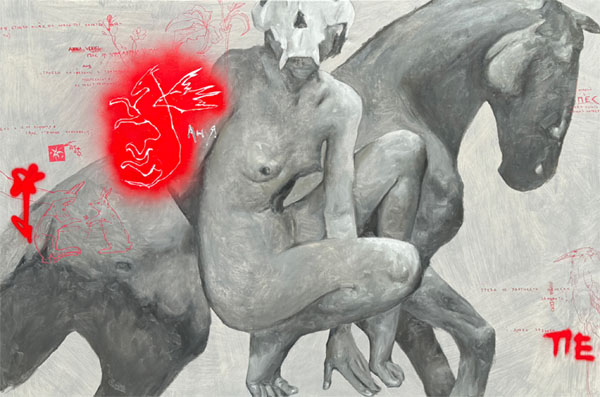
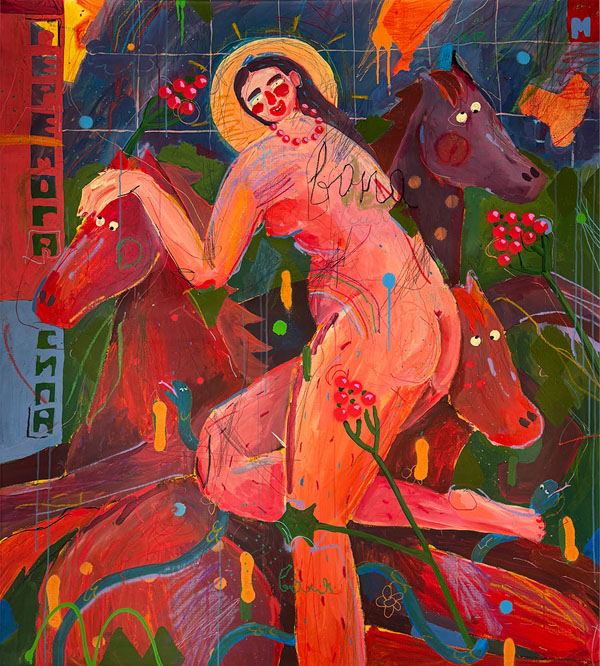
Since the onset of the war in Ukraine in February 2022, Ukrainian women have endured unimaginable challenges, marked by displacement, mental health struggles, economic instability, and vulnerability to violence. Despite these profound hardships, their resilience and spirit have shone through in countless ways, not least through their art. The war has displaced millions of Ukrainian women and children, with 8 million refugees fleeing the country and an additional 6.5 million internally displaced within its borders. This upheaval has fractured communities and forced women to navigate unfamiliar landscapes while grappling with acute stress and trauma. Studies reveal staggering rates of mental health challenges, with nearly all war-displaced Ukrainians showing symptoms of Acute Stress Disorder, and 30% of the population estimated to suffer from PTSD.
The economic and social fabric of Ukrainian life has been deeply altered. With men conscripted for military service, women have stepped into traditionally male-dominated industries, such as mining and heavy labor, while also facing widespread unemployment and poverty. Meanwhile, reports of sexual violence and the harrowing conditions faced by expectant mothers—giving birth in bomb shelters and basements—paint a stark picture of resilience amid adversity.
“She, Unbroken” presents the powerful and intimate voices of Ukrainian-born women artists who have endured the ravages of war and its indelible impact on identity, body, and spirit. The exhibition explores themes of displacement, reinvention, and transformation, delving into the ways conflict reshapes identity and creative expression. Each artist contributes a profound narrative, blending memory and survival in a tapestry of resilience and reinvention. This collection serves as a tribute to their unyielding strength and creativity—a testament to the enduring human spirit.
The exhibition invites viewers to reflect on the quiet strength of women navigating the aftermath of war, with works by Inna Kharchuk, Anna Veriki, Iryna Maksymova and Liza Zhdanova.
The economic and social fabric of Ukrainian life has been deeply altered. With men conscripted for military service, women have stepped into traditionally male-dominated industries, such as mining and heavy labor, while also facing widespread unemployment and poverty. Meanwhile, reports of sexual violence and the harrowing conditions faced by expectant mothers—giving birth in bomb shelters and basements—paint a stark picture of resilience amid adversity.
“She, Unbroken” presents the powerful and intimate voices of Ukrainian-born women artists who have endured the ravages of war and its indelible impact on identity, body, and spirit. The exhibition explores themes of displacement, reinvention, and transformation, delving into the ways conflict reshapes identity and creative expression. Each artist contributes a profound narrative, blending memory and survival in a tapestry of resilience and reinvention. This collection serves as a tribute to their unyielding strength and creativity—a testament to the enduring human spirit.
The exhibition invites viewers to reflect on the quiet strength of women navigating the aftermath of war, with works by Inna Kharchuk, Anna Veriki, Iryna Maksymova and Liza Zhdanova.
Heroes
Presented by Robert Vargas
Booth 305
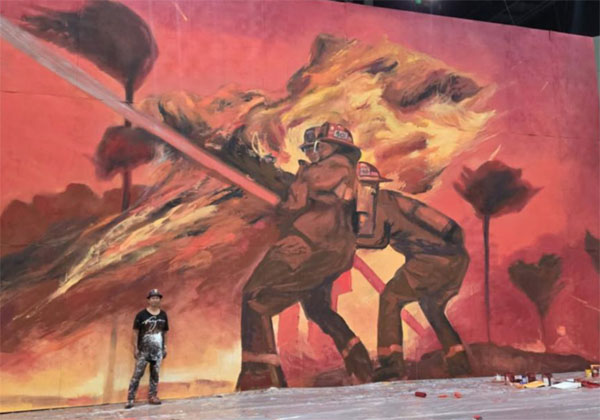
Acclaimed Los Angeles-based muralist, Robert Vargas, will be presenting a special live art experience, entitled Heroes, honoring first responders.
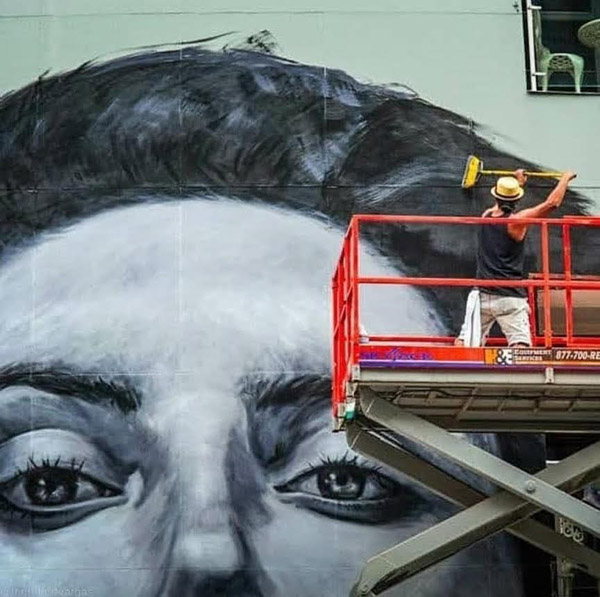
Known for his powerful and dynamic large-scale works, Vargas will create a massive mural onsite at this year’s LA Art Show in a heartfelt tribute to the firefighters and first responders who continue to heroically serve the city during the recent fires and challenges.
This mural, created live during the event, is an homage to the courage, resilience, and selflessness of those who protect and serve our community. The artwork will also serve as a symbol of hope and perseverance, reflecting Los Angeles’ unwavering spirit in overcoming adversity.
“Los Angeles has faced unprecedented challenges in recent times, but through it all, our community’s strength and determination have shone through. This mural will celebrate the heroes among us and honor the resilience of our city,” said Robert Vargas.
Vargas’ mural will come to life in the heart of the LA Art Show, allowing attendees the unique opportunity to witness the creative process firsthand. The work will showcase his signature bold style while capturing the essence of unity and gratitude that defines Los Angeles.
Known for his powerful and dynamic large-scale works, Vargas will create a massive mural onsite at this year’s LA Art Show in a heartfelt tribute to the firefighters and first responders who continue to heroically serve the city during the recent fires and challenges.
This mural, created live during the event, is an homage to the courage, resilience, and selflessness of those who protect and serve our community. The artwork will also serve as a symbol of hope and perseverance, reflecting Los Angeles’ unwavering spirit in overcoming adversity.
“Los Angeles has faced unprecedented challenges in recent times, but through it all, our community’s strength and determination have shone through. This mural will celebrate the heroes among us and honor the resilience of our city,” said Robert Vargas.
Vargas’ mural will come to life in the heart of the LA Art Show, allowing attendees the unique opportunity to witness the creative process firsthand. The work will showcase his signature bold style while capturing the essence of unity and gratitude that defines Los Angeles.